
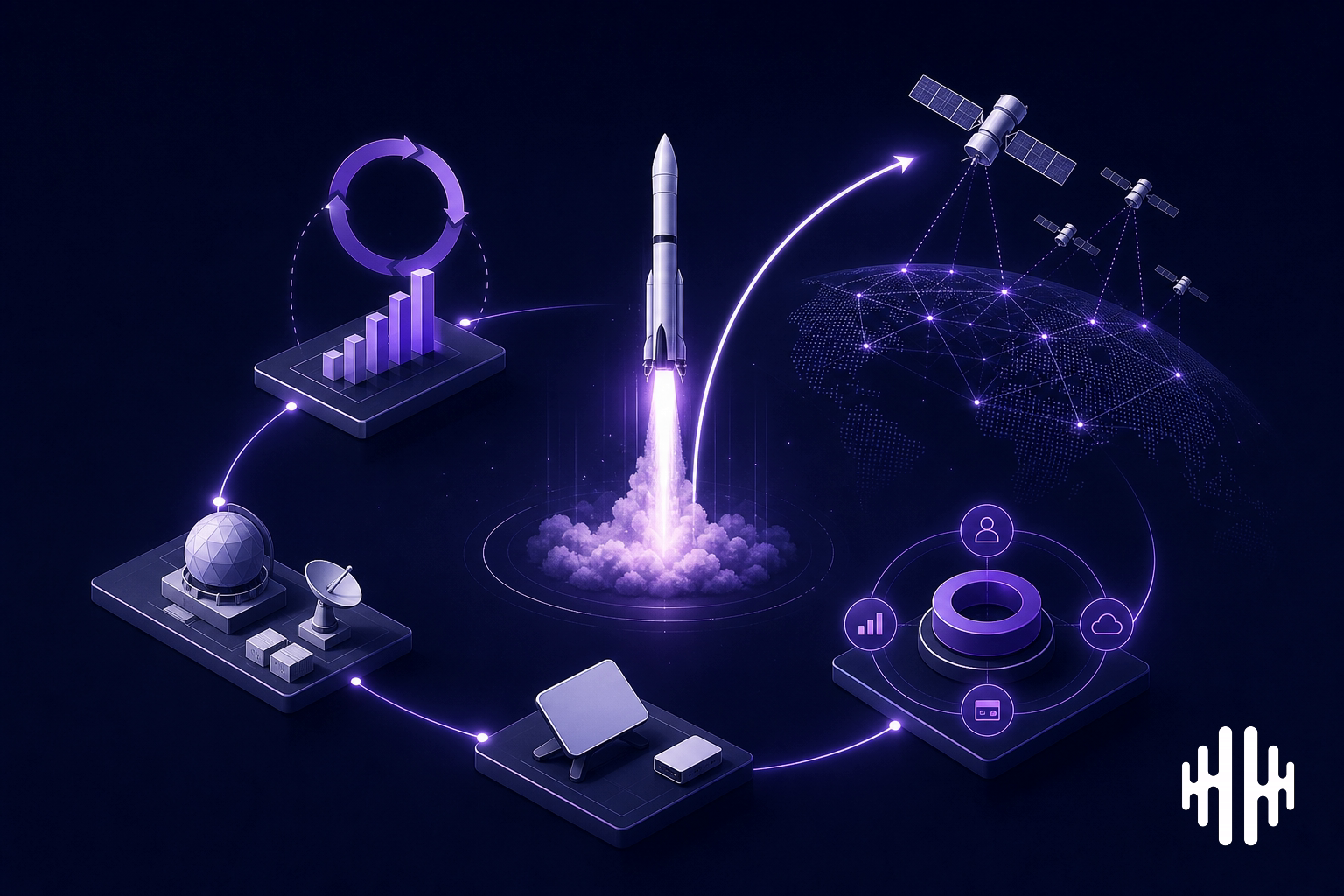
Most startups try to build one product. The best companies build a product system.
That is the real lesson behind the SpaceX IPO. The headlines will focus on the valuation, the market debut, the size of the raise, Elon Musk, Starlink, rockets, Mars, and AI. All the usual noise. But if you look past the noise, there is a sharper product lesson.
SpaceX is not being valued like a rocket company because it is not behaving like a rocket company. It is behaving like a system. One product enables the next. One capability reduces the cost of another. One business line creates credibility for another. One infrastructure layer unlocks a bigger market.
That is what most founders miss. They think product strategy means choosing features. It does not. Product strategy is choosing the sequence of capabilities that make the company stronger over time. SpaceX is a masterclass in that.
For years, the public story around SpaceX was simple: reusable rockets, cheaper launches, and Mars. That story is powerful, but it is incomplete. The launch business gave SpaceX a wedge. It gave the company technical credibility, government trust, operational discipline, and a cost advantage. But launches alone are still project-based. They depend on contracts, schedules, and demand from others.
Then Starlink changed the shape of the business. Starlink turns launch capability into a recurring revenue product. Instead of only selling access to space, SpaceX uses its own launch infrastructure to deploy and scale a satellite internet network. The rocket business helps build Starlink. Starlink creates recurring revenue. That revenue supports more infrastructure. More infrastructure strengthens the launch advantage.
This is not a product line. It is a loop.
A normal company asks, “What product can we sell?” A stronger company asks, “What system can we build that gets harder to copy every year?” That is the difference. Competitors can copy a feature. They can copy a landing page. They can copy pricing. They can copy a product category. But copying a system is much harder.
To copy SpaceX, you do not just need rockets. You need launch frequency, manufacturing capability, satellite deployment, ground stations, regulatory approvals, government relationships, consumer distribution, enterprise contracts, capital, and time. That is the moat. Not one product. Not one breakthrough. Not one launch. The moat is the compounding connection between the pieces.
This is where founders should pay attention. A startup does not need to be SpaceX to learn from SpaceX. The question is not, “How do we build something massive?” The better question is, “How do we make each product decision unlock the next advantage?”
That applies to any startup. A SaaS product can become a data asset. A services workflow can become software. A marketplace can become infrastructure. A niche tool can become a platform. A customer support process can become a knowledge product. An internal operating system can become a client-facing product. The point is not to build everything at once. The point is to build in the right order.
Most product teams talk about roadmap priorities. Few talk about sequencing. There is a difference. Prioritization asks, “What should we do first?” Sequencing asks, “What should this unlock next?” That is a much better question because a feature that looks useful today might create no strategic advantage tomorrow, while a feature that looks boring today might become the foundation for a much bigger move later.
SpaceX did not start with Starlink as a standalone dream. Starlink became more powerful because SpaceX already had launch capability. The sequence mattered. Launch first. Reuse and reduce cost. Increase launch cadence. Deploy satellites. Build Starlink. Create recurring revenue. Use that revenue to fund the next layer. Each step made the next one more believable.
That is what great product strategy does. It does not just create outputs. It creates leverage.
Founders love big vision. Investors love big markets. Teams love exciting roadmaps. But product strategy lives in the middle. It turns ambition into a sequence. Without sequencing, vision becomes theater.
You can say you are building a platform. You can say you are creating an ecosystem. You can say you are changing an industry. But if your first product does not create a real advantage for the second product, you are just stacking ideas.
That is where many startups get stuck. They build disconnected features. They chase every customer request. They add AI because everyone is adding AI. They launch modules that do not reinforce each other. They expand before the core loop is strong. The result is not a product system. It is a product pile.
There is a difference. A product pile gets heavier over time. A product system gets stronger over time.
The SpaceX IPO is not just a finance story. It is a reminder to ask better product questions. Before adding the next feature, ask what it unlocks. Does it reduce a future cost? Does it create new distribution? Does it make the product harder to copy? Does it improve your data advantage? Does it increase retention? Does it open a new customer segment? Does it strengthen the core product? Does it make the next product easier to build?
If the answer is no, the feature may still be useful. But it is probably not strategic. And that distinction matters. Useful features can keep customers happy. Strategic features change the trajectory of the company.
Not every startup needs a platform. Not every company needs an ecosystem. Not every product needs to become infrastructure. But every founder needs to understand how today’s product decisions shape tomorrow’s options.
That is the real product strategy lesson from SpaceX. The company did not just build rockets. It built a chain of capabilities. Launch capability made Starlink possible. Starlink created a recurring revenue engine. Recurring revenue helped justify a bigger capital story. The capital story funds more ambitious infrastructure.
That is compounding product strategy. And it is rare. Most companies build product by product. The best ones build advantage by advantage.
So the question every founder should take from the SpaceX IPO is simple: are you building a product, or are you building the system that makes every next product stronger?